
Why Is My Dog So Itchy in Spring? Seasonal Allergies in Dogs Explained

As the weather becomes warmer and dogs across London start spending more time outdoors, many owners begin noticing the same frustrating pattern each year. Their dog suddenly becomes itchy, starts licking their paws constantly, develops sore ears or scratches far more than usual.
For some dogs, spring and summer can be incredibly uncomfortable because of seasonal allergies.
Environmental allergies are one of the most common causes of itching in dogs, and while some pets experience only mild flare-ups, others can develop ongoing skin and ear problems that significantly affect their quality of life.
One of the hardest parts for owners is that there is rarely a quick or simple fix. Allergies often require long-term management, patience and a treatment plan tailored to the individual dog.
The good news is that there are now many ways to help allergic dogs feel far more comfortable and prevent symptoms becoming severe.
Contents
What Are Seasonal Allergies in Dogs?
Seasonal allergies, also called environmental allergies or atopic dermatitis, happen when a dog’s immune system overreacts to allergens in the environment.
Common triggers include:
Grass pollen
Tree pollen
Weed pollen
Mould spores
Dust mites
Unlike people, who often develop sneezing or watery eyes, dogs usually show allergy symptoms through their skin.
This means allergic dogs often become itchy, uncomfortable and inflamed, particularly during spring and summer when pollen levels rise.
Why Do Allergies Worsen in Spring?
Spring creates the perfect conditions for environmental allergens to spread.
As trees and grasses release pollen, dogs come into contact with allergens every time they go outside. Allergens settle on the skin and coat, especially around the paws, belly, ears and face.
Dogs commonly pick up allergens:
Walking through grass
Playing in parks
Rolling outdoors
Lying on lawns
Through airborne pollen settling on their coat
Even dogs living in urban areas can be heavily affected, particularly if they regularly visit parks and green spaces.
Many owners notice symptoms returning around the same time every year.
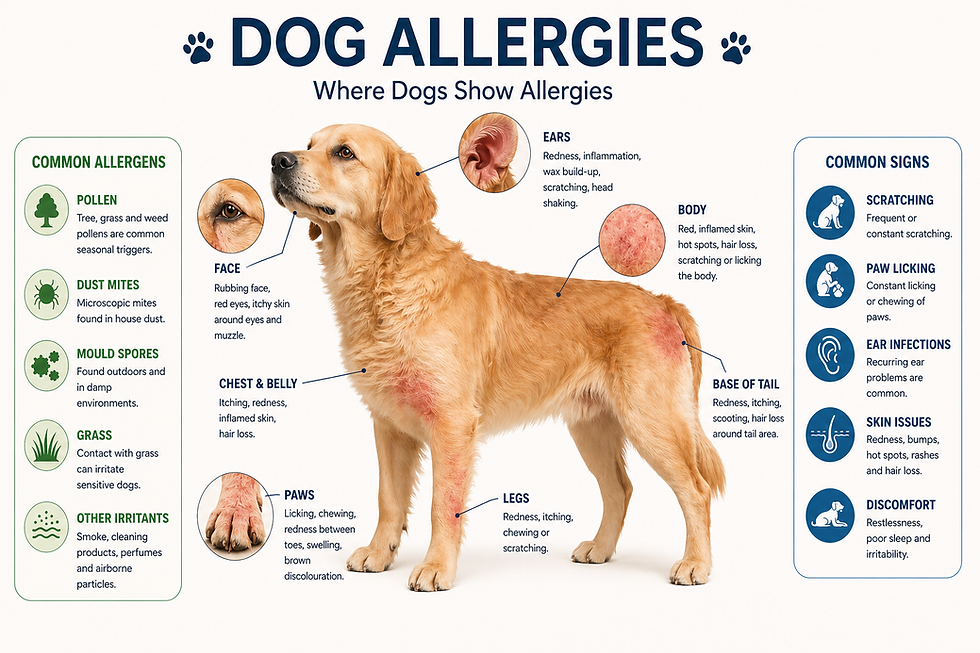
Common Signs of Seasonal Allergies
Seasonal allergies can look slightly different from dog to dog, but common signs include:
Persistent scratching
Paw licking or chewing
Red or inflamed skin
Recurrent ear infections
Head shaking
Rubbing the face
Hair loss
Chewing at the belly or legs
A strong smell from the skin or ears
Restlessness, especially at night
Some dogs also develop secondary skin infections caused by bacteria or yeast, which can make symptoms much worse.
Why Paw Licking and Ear Infections Are So Common
Paw licking is one of the earliest and most common signs of environmental allergies.
Dogs walk directly through pollen, grass and environmental irritants every day, and the delicate skin between the toes becomes inflamed very easily.
Owners often notice:
Red paws
Swollen toes
Brown saliva staining
Excessive licking after walks
Dogs chewing their feet in the evenings
Unfortunately, once dogs begin licking repeatedly, the skin barrier becomes damaged and infections can develop.
Ear infections are also extremely common in allergic dogs. Allergic inflammation changes the environment inside the ear canal, making yeast and bacterial overgrowth much more likely.
Signs of an ear problem may include:
Head shaking
Scratching at the ears
Smelly ears
Redness
Wax build-up
Sensitivity around the ears
Many dogs with recurring ear infections actually have underlying allergies contributing to the problem.

Seasonal Allergies vs Food Allergies
Owners often wonder whether food could be causing their dog’s itching.
Food allergies can cause very similar symptoms, including itchy skin, paw licking and recurrent ear infections. However, there is one important difference.
Environmental allergies are often seasonal, with symptoms worsening during spring and summer.
Food allergies, on the other hand, usually cause symptoms all year round.
Dogs with food allergies are typically itchy regardless of the season or weather.
Food allergies are also less common than environmental allergies.
If food allergies are suspected, your vet may recommend a carefully controlled dietary trial using a prescription hypoallergenic diet. This requires strict consistency over several weeks, as even small treats or flavoured foods can interfere with results.
Some dogs may have both environmental and food allergies together, which can make management more complicated.
Which Dogs Are More Prone to Allergies?
Although any dog can develop allergies, some breeds appear more predisposed, including:
French Bulldogs
Labrador Retrievers
Golden Retrievers
West Highland White Terriers
Staffordshire Bull Terriers
Cocker Spaniels
Boxers
Shar Peis
Symptoms often begin between one and three years of age, although allergies can develop later in life too.
Why Allergy Treatment Can Take Time
One of the biggest frustrations for owners is discovering that allergies rarely have a simple cure.
Environmental allergies are usually lifelong conditions, which means treatment is focused on long-term management rather than permanently curing the problem.
Many owners understandably hope that one injection, one course of tablets or one shampoo will completely solve the issue. Unfortunately, allergies are often much more complex than that.
Some dogs only need support during spring and summer, while others experience flare-ups for much of the year. Symptoms can also change over time, meaning treatment plans sometimes need adjusting as dogs get older or allergies become more severe.
Managing allergies often involves:
Controlling inflammation
Reducing itching
Treating ear or skin infections
Repairing the skin barrier
Identifying triggers
Preventing flare-ups
Some dogs respond quickly to treatment, while others require several medication changes before symptoms become stable.
For many dogs, allergies are about finding the right balance of treatments to keep them comfortable and maintain a good quality of life.
How Vets Diagnose Seasonal Allergies
There is no single quick test that instantly confirms seasonal allergies.
Diagnosis usually involves:
Reviewing your dog’s history
Examining the skin and ears
Ruling out fleas and parasites
Treating secondary infections
Assessing symptom patterns
Sometimes investigating food allergies
Food allergies are investigated because they can look very similar to environmental allergies. However, unlike seasonal allergies, food allergies usually cause itching throughout the entire year.
If food allergies are suspected, your vet may recommend a strict dietary trial using a prescription hypoallergenic diet for several weeks. During this time, all treats and flavoured foods must be avoided to ensure the trial is accurate.
Because many skin conditions can appear similar initially, veterinary assessment is important before starting long-term treatment plans.
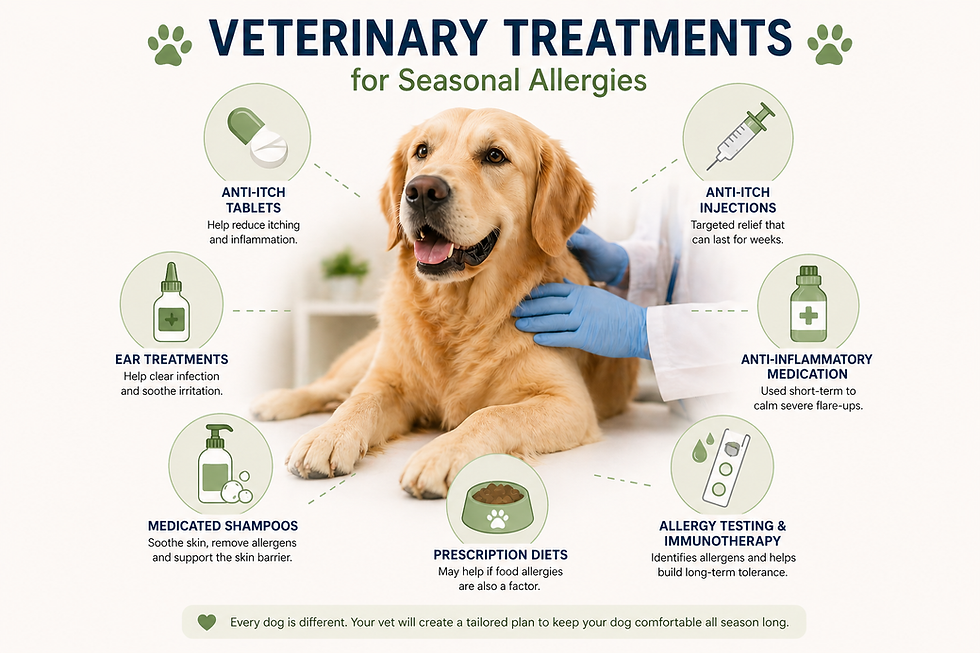
Treatments for Seasonal Allergies in Dogs
Treatment depends on the severity of symptoms and the individual dog.
Many allergic dogs benefit from a combination of treatments rather than one single solution.
Anti-Itch Tablets
There are prescription anti-itch tablets available that help calm the body’s itch and inflammation signals associated with allergies.
In simple terms, these medications work by interrupting the signals that tell your dog’s body to itch, helping reduce scratching, paw licking, chewing and skin irritation.
They can work quite quickly in many dogs and are commonly used during seasonal flare-ups or as part of longer-term allergy management.
For some dogs, these medications can make a significant difference to comfort and quality of life, particularly during peak pollen seasons.
Anti-Itch Injections
Some dogs benefit from targeted anti-itch injections designed specifically for environmental allergies.
These injections work by blocking one of the main itch signals involved in allergic skin disease, helping to reduce scratching, paw licking and skin irritation without broadly suppressing the immune system.
Many dogs experience noticeable relief, particularly during peak allergy seasons, and the effects can last for several weeks in some cases.
These treatments are commonly used as part of longer-term allergy management plans, especially in dogs with recurring seasonal flare-ups.
Short-Term Anti-Inflammatory Medication
Some dogs need short-term medication to rapidly calm severe flare-ups and reduce inflammation.
Medicated Shampoos and Skin Care
Bathing with vet-recommended shampoos can help:
Remove allergens from the coat
Soothe inflamed skin
Reduce infection risk
Support the skin barrier
Ear Treatments
Dogs with recurrent ear infections often require prescription ear medication alongside allergy treatment.
Antibiotics and Anti-Yeast Medication
If infections develop due to scratching or licking, additional treatment may be needed before symptoms fully improve.
Prescription Diets
Some dogs benefit from dietary management, particularly if food allergies may also be contributing to symptoms.
Allergy Testing and Immunotherapy
In dogs with severe or ongoing environmental allergies, allergy testing may sometimes be discussed.
This type of testing helps identify environmental allergens potentially contributing to symptoms, such as:
Grass pollens
Tree pollens
Dust mites
Moulds
Weeds
Importantly, allergy testing for environmental allergies is different from investigating food allergies.
The results may help guide immunotherapy treatment plans. Immunotherapy aims to gradually reduce the immune system’s sensitivity to allergens over time using carefully controlled exposure to allergens.
The goal is to:
Reduce flare-ups
Improve comfort
Reduce itching over time
Lower reliance on medication
Some dogs respond extremely well, while others show more modest improvement.
Owners should also understand:
Improvement can take several months
Not every dog responds successfully
Ongoing medication may still be needed
Treatment plans often require adjustments
Costs can become significant over time
The Reality of Long-Term Allergy Management
One of the most difficult parts of managing allergies can be the ongoing cost and commitment involved.
Many owners understandably hope that a single injection or short course of tablets will permanently solve the problem. Unfortunately, environmental allergies are usually lifelong conditions that need ongoing management rather than a one-off cure.
Some dogs only need treatment during spring and summer, while others may require support for much of the year.
Over time, costs can build up through:
Consultations
Long-term medication
Ear treatments
Medicated shampoos
Prescription diets
Allergy testing
Immunotherapy
Owners should also know that requesting a written prescription from their vet can sometimes help reduce medication costs.
Online pharmacies are often able to supply long-term medications more cheaply because they buy medications in much larger quantities and generally have lower running costs than veterinary practices.
However, many owners are surprised to learn that vets usually charge a fee for written prescriptions. This is because writing a prescription is still a professional veterinary service and carries legal responsibility.
Before issuing medication, vets need to make sure:
The medication is still safe and appropriate
Your dog is responding well to treatment
No adjustments are needed
Prescribing regulations are being followed correctly
There is also important administrative work involved in reviewing records, preparing prescriptions and maintaining accurate documentation.
Because of prescribing regulations, there are usually limits on how much medication can be prescribed at one time, and regular recheck appointments are often required before further medication can be issued.
While online pharmacies can sometimes help reduce the cost of long-term allergy medication, ongoing veterinary monitoring is still extremely important to ensure treatment remains safe, appropriate and effective for your dog.

How to Help an Itchy Dog at Home
While there are several things owners can do at home to help reduce irritation, the most important step is seeking veterinary advice early.
Allergies rarely improve with home remedies alone. Dogs with ongoing itching often require medical treatment to control inflammation, manage infections and prevent symptoms worsening over time.
Home care works best alongside veterinary treatment.
Follow Veterinary Treatment Recommendations
Consistency is extremely important when managing allergies.
Depending on your dog’s symptoms, treatment may include:
Anti-itch tablets or injections
Ear medication
Medicated shampoos
Antibiotics or anti-yeast treatment
Allergy testing or immunotherapy
Wipe Paws After Walks
Cleaning paws and lower legs after walks may help remove pollen and grass particles before they continue irritating the skin.
Bathe Regularly
Using a vet-recommended shampoo can help remove allergens from the coat and soothe inflamed skin.
Wash Bedding Frequently
Regularly washing bedding and blankets may help reduce allergens indoors.
Consider an Air Purifier
Some owners find air purifiers helpful for reducing airborne allergens inside the home, including pollen, dust and mould spores.
HEPA filter air purifiers are generally considered the most effective option and may help dogs whose symptoms worsen indoors or overnight.
However, air purifiers are unlikely to solve allergy symptoms on their own and are best viewed as one small part of a wider allergy management plan.
Keep Flea Prevention Up To Date
Even small numbers of fleas can significantly worsen itching in allergic dogs.
Monitor Symptoms Early
Addressing symptoms early often helps prevent more severe flare-ups and infections later.
When Should You Contact Your Vet?
It is important to seek veterinary advice if your dog:
is persistently itchy
constantly licks their paws
develops recurrent ear infections
has sore or smelly skin
seems uncomfortable or restless
develops hair loss or scabs
The earlier allergies are addressed, the easier they are often to manage.
At Roundwood Vets, we understand how frustrating seasonal allergies can be for both dogs and owners. While allergy treatment often requires patience and ongoing management, helping dogs become more comfortable and improving their quality of life is always the priority.
If your dog seems increasingly itchy this spring, our team is always happy to help assess their symptoms and discuss the most appropriate treatment options.
We believe that preventing illness is one of the best ways to keep your pet fit, comfortable, and happy throughout their life.
That’s why we’ve created the Vital Pets Club, designed to make essential preventative care simple, accessible, and more affordable.
Vital Pets Club helps to spread the cost of preventive care, including vaccinations and parasite protection, into easy monthly payments, so you can keep your pet protected all year round.
It’s a simple way to stay on top of your pet’s health and enjoy peace of mind, knowing their preventative care is taken care of. (T&C's Apply)

.png)


