
How to Spot Tooth Pain in Pets (Even When They’re Still Eating)

If your pet is eating normally, you might assume everything’s fine — but tooth pain in dogs and cats can be surprisingly hard to detect. Animals are instinctively good at hiding discomfort, and many will continue eating even when their mouth is sore or infected.
In this blog, we’ll explain why pets mask pain, how to recognise the subtle signs of dental discomfort, and when to seek veterinary help — because just because they’re eating, doesn’t mean they’re not in pain.
Contents
Why Pets Hide Tooth Pain
In the wild, animals that show pain can become vulnerable to predators or risk being excluded from the group. This evolutionary survival instinct is still strong in our pets today — especially cats, who are particularly skilled at concealing discomfort.
As a result, dental disease can progress for months or even years without obvious signs. Your pet may continue eating, playing, and appearing normal, even while dealing with painful teeth, infected gums, or fractured molars.
Can Pets Eat With Tooth Pain?
Yes — and this is one of the biggest myths in pet health. Just because your dog or cat is eating, it doesn’t mean their mouth is pain-free. Many animals will adjust how they eat to avoid aggravating sore spots, all while masking the pain from their owners.
Some may:
Swallow food whole instead of chewing
Chew on one side of the mouth only
Drop food from their bowl
Prefer soft food over kibble
These behaviours often go unnoticed — which is why it’s so important to recognise the less obvious signs of oral discomfort.
Subtle Signs of Dental Discomfort
Tooth pain doesn’t always show up as obvious distress. More often, it appears as subtle changes in eating habits, facial expressions, or behaviour. Knowing what to look for can help you spot issues early, before they become serious.
Keep an eye out for:
Slower eating or taking longer to finish meals
Preferring soft food or refusing hard treats
Dropping kibble or chewing on one side only
Leaving food in the bowl when normally eager to eat
Lip smacking or excessive drooling after meals
While these signs may seem minor, they can indicate significant discomfort and should not be ignored.
Behavioural Clues to Watch For
Pain can also affect your pet’s personality or behaviour. Pets in discomfort may become withdrawn, irritable, or less playful — often without any other signs of illness.
Watch for changes such as:
Avoiding head pats or flinching when touched near the mouth
Sleeping more or being less interested in play
Sudden aggression when touched around the face
Hiding or becoming more reserved than usual
Pawing at the mouth or rubbing their face on furniture
These behaviours may come and go, making them easy to overlook. However, consistent changes should prompt a closer look at your pet’s dental health.
Physical Signs of Oral Pain
Sometimes, visible changes in your pet’s mouth or facial area may point to dental problems. These physical symptoms are often more apparent in moderate to advanced stages of disease.
Common physical signs include:
Bad breath (halitosis)
Red, swollen, or bleeding gums
Yellow or brown tartar build-up
Loose or broken teeth
Swelling under the eye or jaw
Blood on toys or chews
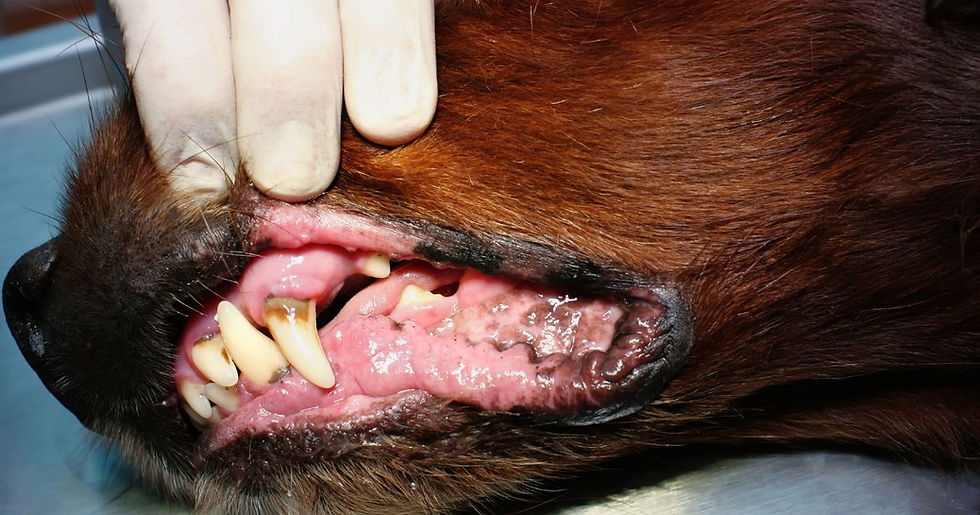
If you’re comfortable doing so, gently lift your pet’s lip to check for redness, bleeding, or tartar. But always take care — painful mouths can make even the gentlest pet react unpredictably.
When to Book a Dental Check-Up
If you’ve noticed any of the signs above — even if your pet is still eating — it’s time to book a check-up. Many dental problems, such as abscesses, gum disease, or fractured teeth, require professional treatment and can’t be resolved with home care alone.
Early intervention can:
Prevent unnecessary pain
Save teeth from extraction
Reduce long-term treatment costs
Improve your pet’s energy, appetite, and behaviour
We recommend annual dental checks for all pets, and more frequent monitoring for those with a history of oral issues.
How Roundwood Vets Can Help
At Roundwood Vets, we take dental health seriously — not just for fresh breath and clean teeth, but for your pet’s comfort and overall wellbeing. Our team offers thorough dental assessments, scale and polish procedures, x-rays to check below the gumline, and gentle treatment plans tailored to your pet’s needs.
We also offer guidance on:
Brushing techniques
Dental diets and chews
Ongoing monitoring for senior pets
Our goal is to catch problems early and make dental care as stress-free as possible — for pets and owners alike.
Final Thoughts
Just because your pet is eating doesn’t mean their mouth is pain-free. Dogs and cats are experts at hiding discomfort, especially when it comes to their teeth. By staying alert to the subtle signs of dental pain, you can help protect your pet from unnecessary suffering and support a longer, happier life.
📞 Noticed something unusual? Book a dental check-up with Roundwood Vets — we’re here to help you get to the root of the issue.
We believe preventing disease is a far better way of helping your pet stay fit, comfortable, happy and healthy. So we’ve created the Vital Pets Club to make sure every pet owner has easy access to the best pet care at an affordable price.
Save money, and help your pet live a happy and healthy life with Vital Pets Club, by Roundwood Vets.

.png)


